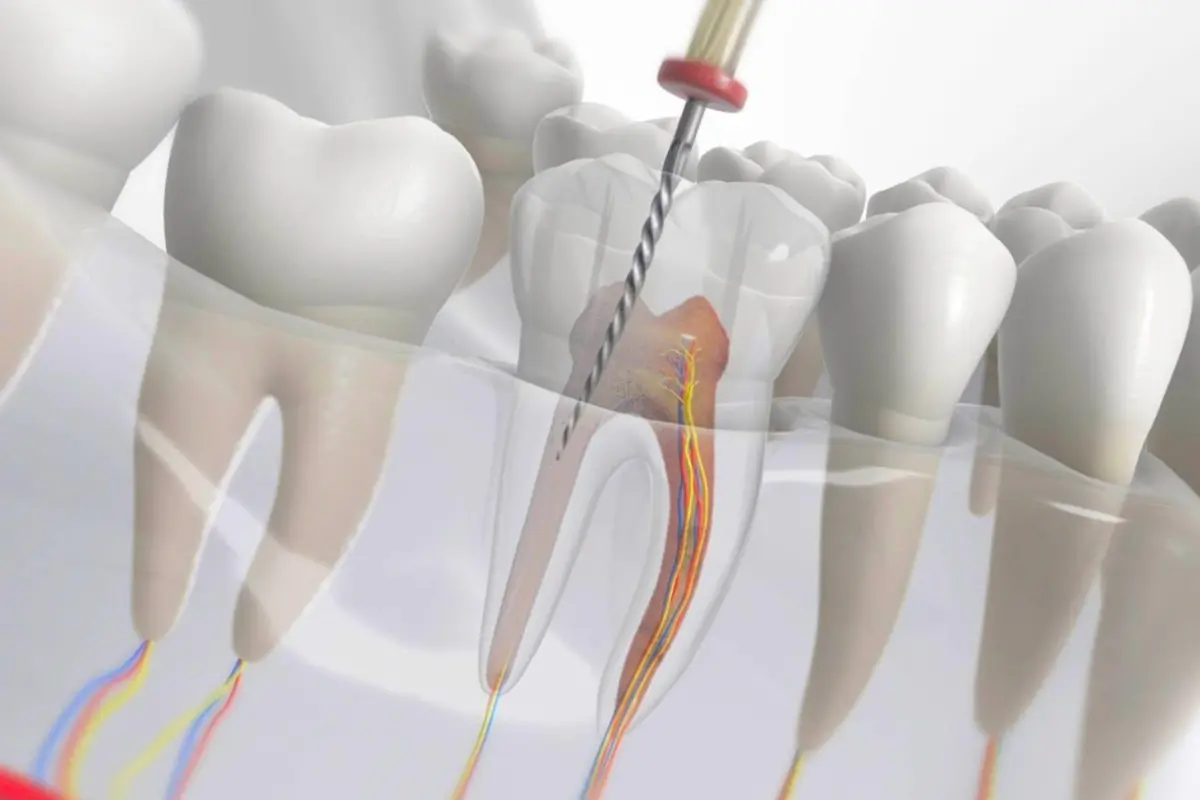
Pain-free procedures to save infected teeth and restore oral health
Find clear answers to common dental concerns, treatments, procedures, and patient care at Surabhi Dental Clinic.
The very first step involves an X-ray which is taken to determine the extent and approach to infection. If required local anesthesia is administered before starting the treatment.
The next step is Cavity Preparation. A cavity is prepared, making sure all the infected tooth material or previous filling material is removed and a proper approach to inner-part of the tooth (pulp) is established.
This is followed by disinfection and shaping of pulp canals. The infected pulp is cleared out completely, canals are shaped and cleaned. Thorough disinfection is achieved.
Clean and disinfected canals are then sealed and filled with an inert rubber-like filling material known as Gutta-Percha.
The very last step is restoration & crown. The crown portion of the tooth cavity is then restored with a filling, followed by a Cap/Crown cementation.
Even if one does not feel pain the infected tooth will not heal itself and require a proper RCT.
Because the tooth is infected one feels constant pain it is assumed that the treatment will also hurt. But in reality, the treatment is pain-free.
A successful RCT can result in pain for a few days but this pain is temporary and will go away with time. One just need to follow good oral care practice.
Anterior or front teeth have one canal and the back teeth have multiple canals, therefore, the procedure might take 1-3 visits depending upon the difficulty.
Initially for a few days after the braces are fixed , some discomfort can be expected . Much depends on the pain perception of individual and his tolerance . Pain may develop on the cheeks, lips or the tongue after the braces are fixed . Warm salt water rinsing and dentogel help to heal the sores
Schedule your visit with our experienced dental team for personalized care in a comfortable setting. From routine check-ups to advanced treatments, we ensure timely appointments, expert consultation, and a smooth, patient-focused experience from start to finish.